
North Carolina boasts some of the most varied hunting landscapes in the Southeast. Success for both spring turkeys and the next fall’s deer season often comes down to the legwork you do in late winter, after deer season and while small game hunting until the end of Feb. This period is a golden opportunity because the woods are wide open, last fall’s deer sign is still visible, and turkeys are beginning to break into their spring patterns. Here’s how to scout for both species at once.
The “Two-for-One” Advantage: Why Scout Both Now?
The late winter woods offer a unique “two-for-one” scouting advantage. The lack of foliage means you can see terrain features and old sign with perfect clarity.
- Shared Resources: Areas with mature hardwoods that drop acorns are magnets for both deer and turkey. Find the oaks, and you’ll find where both species want to be.
- Visible Sign: Last fall’s buck rubs and scrapes stand out brightly on trees, revealing travel corridors you can hunt next year. At the same time, turkey scratching is easy to spot in the bare leaves.
- Understanding Travel: While scouting for turkey roosts along creek bottoms, you’re also walking the same low-lying travel corridors that bucks use during the rut and where doe’s frequently walk as well. Pinning these routes now pays dividends for both spring and fall.
The Bonus Prize: Shed Hunting
While you’re out looking for deer and turkey sign, keep your eyes peeled for a special bonus: dropped antlers. Bucks across North Carolina shed their antlers from late January through March, and finding one is more than just a cool souvenir.

- A Confirmation of Survival: Finding a shed is concrete proof that a specific buck made it through the hunting season. Finding a pair of matched sheds is even better.
- Pinpointing Core Areas: Bucks spend most of their time in their core areas, especially in the late season. Finding a shed tells you exactly where a buck was bedding and feeding post-rut. Focus your search in thick bedding cover (like clear-cuts and laurel thickets) and near late-season food sources.
- Informing Future Hunts: The location of a shed gives you a critical piece of the puzzle for the following fall. You now have a starting point to hang trail cameras and focus your efforts for opening day.
The Digital Advantage: Using OnX and HuntStand
Your smartphone is your most powerful scouting tool. Use it to build a detailed map of animal activity.
- For Turkeys: Pin scratching, droppings (the “J” vs. the spiral), and potential roost sites under large pines or hardwoods.
- For Deer: Pin last season’s rubs and scrapes, and any sheds you find. A concentration of these marks a buck’s core area. Mark heavily used trails, bedding areas (thickets, southern-facing slopes), and food sources.
- The “Morning of” Reference: During a hunt, you can use your pins to navigate in the dark and set up in the perfect spot, whether it’s 150 yards from a roosted gobbler or 20 yards from a major deer trail.
Old School Reliability: Topographical Maps
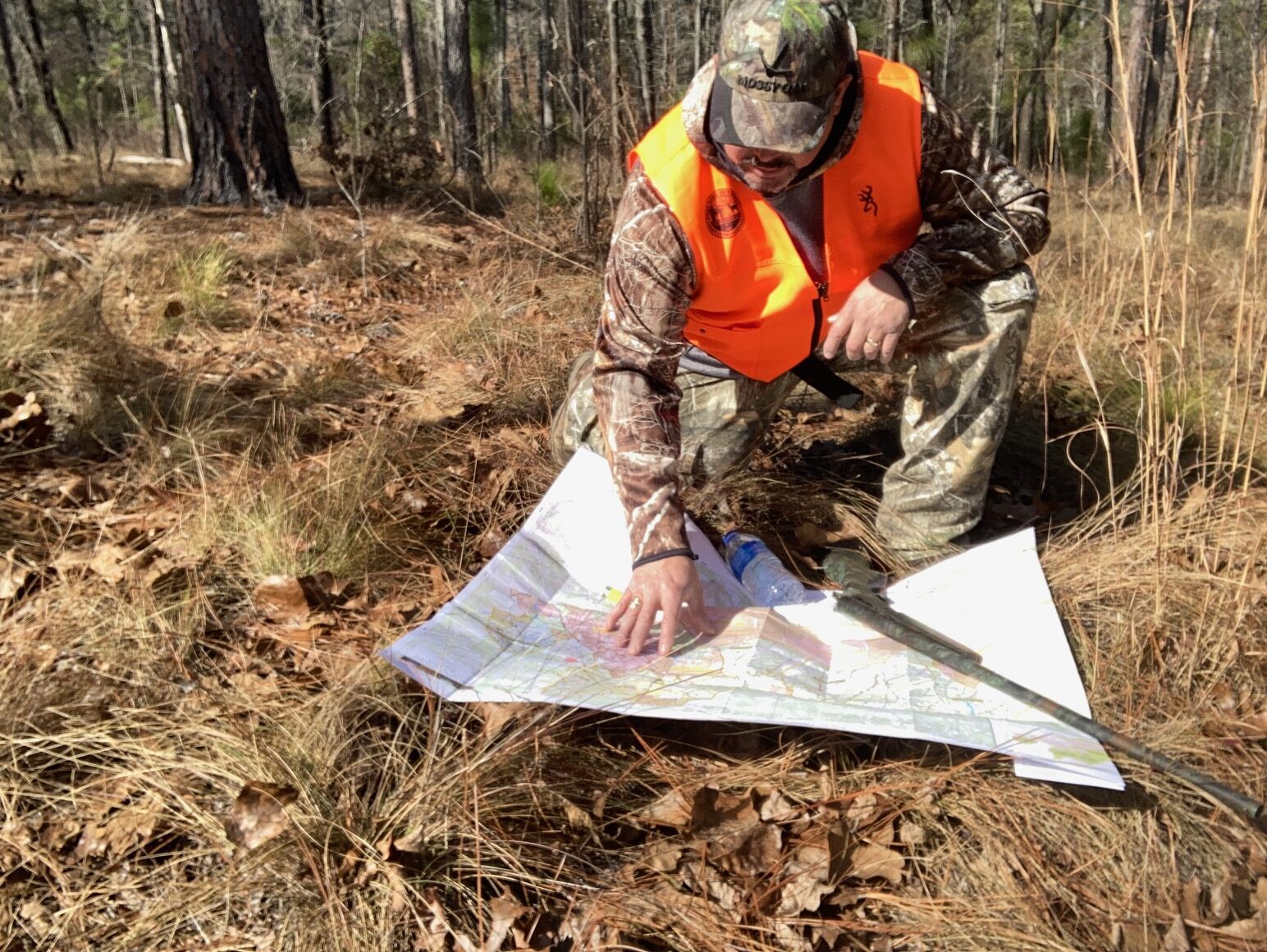
When technology fails, a paper or topographical map and compass are indispensable. Use them to understand how animals use the terrain.
- For Turkeys: Look for “benches”—flat spots on the side of steep hills where gobblers love to strut.
- For Deer: Identify “saddles” between ridges, “pinch points” where terrain funnels movement, and the inside corners of fields. These are classic ambush locations. Mark potential bedding areas on south-facing slopes for warmth in winter.
- Navigation: Practice land navigation to ensure you can always find your way back, regardless of your phone’s status.
Strategic Access: Finding the Right Parking
Where you park often dictates your success. Don’t just use the main lots.
- Adjacent Access: Use your hunting apps to find small, overlooked pull-offs that provide a backdoor into your hunting area, away from the crowds.
- The “One-Mile Rule”: Most hunters won’t walk more than a half-mile from their truck. Find parking that allows you to cross a creek or climb a steep hill to put distance and effort between you and others.
- Legality of Roadside Parking: When parking on the shoulder of a public highway, ensure your vehicle is not obstructing traffic and is clearly visible. On Game Lands, it is unlawful to block traffic or gates. Always check local regulations and, if on private land, get written permission before parking.
Your Blueprint for Success
The “off-season” is a misnomer; it’s the season for preparation. The effort you invest now—walking the miles, studying the maps, and piecing together the puzzle of animal movement—is the foundation for your success. By combining high-tech tools with old-school woodsmanship, you can create a detailed blueprint of your hunting grounds. When opening day of spring gobbler or fall deer season arrives, you won’t be guessing where the animals are. You’ll know, because you did the work when no one else was looking. So grab your boots, charge your phone, and hit the late-winter woods. The rewards will be waiting for you.


