
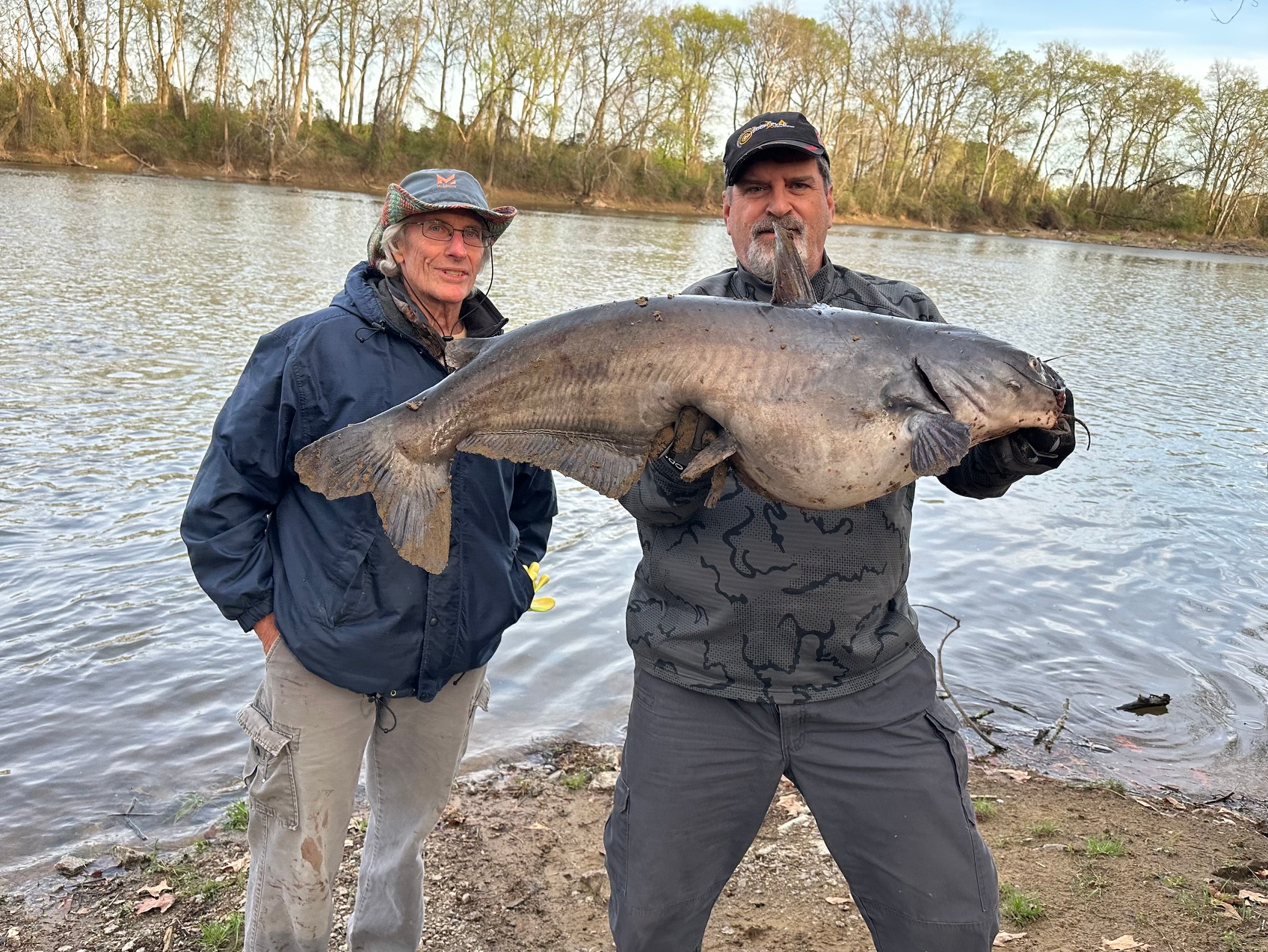
Bank fishing for blue catfish on the Cape Fear River is one of the most rewarding ways to experience North Carolina’s freshwater fisheries. The river’s deep bends, shifting currents, and abundant forage create ideal habitat for trophy‑class blues, and anglers who learn to read these waters can find consistent success year‑round. Fall Line Outdoors, a chapter of the North Carolina Wildlife Federation, encourages anglers of all experience levels to explore this accessible and conservation‑minded style of fishing.
Understanding the Cape Fear River
The Cape Fear is a dynamic river system influenced by rainfall, dam releases, and tidal movement. These fluctuations directly affect where blue catfish position themselves.
- High water: Fish often push tight to the bank, using flooded brush, root systems, and current breaks as ambush points.
- Low water: Blues slide deeper, settling along ledges, drop‑offs, and the edges of the main channel.
Successful anglers pay attention to river gauges and look for areas where current slows—eddies, inside bends, and behind large structure.
Recommended Gear for Bank Fishing

Blue catfish are powerful fish, and the right gear makes a big difference:
- Rods: 7–9 ft medium‑heavy or heavy rods with strong backbone
- Reels: Spinning or baitcasting reels with smooth, reliable drag
- Line: 20–40 lb monofilament or 40–65 lb braided line
- Terminal Tackle: 3–8 oz no‑roll sinkers, circle hooks (5/0 for smaller blues, with larger hooks from 8/0 to 12/0 for trophy blues), heavy swivels, abrasion‑resistant leaders
- Useful Extras: Rod holders, headlamps, long‑handled nets, and a cutting board for bait prep
Whether you prefer spincasting, open‑face spinning, or baitcasting setups, the key is durability and control in strong current.
Best Time of Day
Blue catfish feed throughout the day, but low‑light periods are prime. Evening, night, and early morning offer the best action, especially during warm months when big fish move shallow to hunt. On overcast days, the bite often stays strong well into midday.
Effective Baits
Blue cats are scent‑driven predators, and fresh bait consistently outperforms frozen options. Popular choices include:
- Fresh cut shad
- Cut mullet
- Chicken liver or chicken breast soaked in attractants
- Live bream (where legal)
Cut bait should be firm enough to stay on the hook during long casts and heavy current.
Pro Tips for Success
- Use circle hooks and let the rod load—no hookset needed.
- Fan‑cast to cover multiple depths and current seams.
- Refresh bait regularly, in fast water.
- Stay patient—blue cats often feed in waves.
- Prioritize safety on steep, wet, or unstable banks.
Concerns About Blue Catfish as a Non-Native Species
While blue catfish provide exciting fishing opportunities, it is important to recognize that they are not native to the Cape Fear River system. Originally introduced for sport fishing, blue catfish populations have expanded significantly, raising ecological concerns.
- Impact on native species: Blue catfish are large, opportunistic predators that can compete with and prey upon native fish species, potentially disrupting the natural balance of the river’s ecosystem.
- Altered food webs: Their presence can shift food web dynamics by reducing populations of forage fish and other aquatic organisms that native species rely on.
- Habitat changes: Large blue catfish may influence habitat use and availability for native species through their feeding and movement patterns.
Ongoing monitoring and management efforts are essential to balance recreational fishing benefits with the health of the Cape Fear River’s native aquatic communities.
How to Clean, Process, and Cook Blue Catfish
Cleaning and Processing:
- Rinse the fish thoroughly with clean water.
- Use a sharp fillet knife to make a cut behind the gills and along the backbone to remove the fillets.
- Remove the skin if desired; blue catfish skin can be tough, so many anglers prefer skinless fillets.
- Trim away any dark meat or bloodline to improve taste.
- Rinse fillets again and pat dry.
Cooking Tips:
- Blue catfish fillets are versatile and can be fried, grilled, baked, or blackened.
- For frying, coat fillets in seasoned cornmeal or flour and cook in hot oil until golden brown.
- Grilling works well with a marinade or dry rub to add flavor.
- Baking with herbs, lemon, and butter keeps the fish moist and flavorful.
- Because blue catfish can have a mild “muddy” taste if caught from certain waters, soaking fillets in milk or a light brine before cooking can help reduce this.
Enjoy your catch responsibly and savor the unique flavors of this powerful river fish.
Fishing as Conservation
Fishing on the Cape Fear River isn’t just recreation—it directly supports wildlife conservation. In North Carolina, hunters and anglers fund the majority of fish and wildlife management through license sales and federal excise taxes on rods, reels, tackle, and boat fuel. These dollars support habitat restoration, water quality projects, fish stocking, and scientific research that benefits every species in the watershed.
By fishing responsibly and ethically, anglers help ensure that the Cape Fear River remains a thriving ecosystem for generations.


