
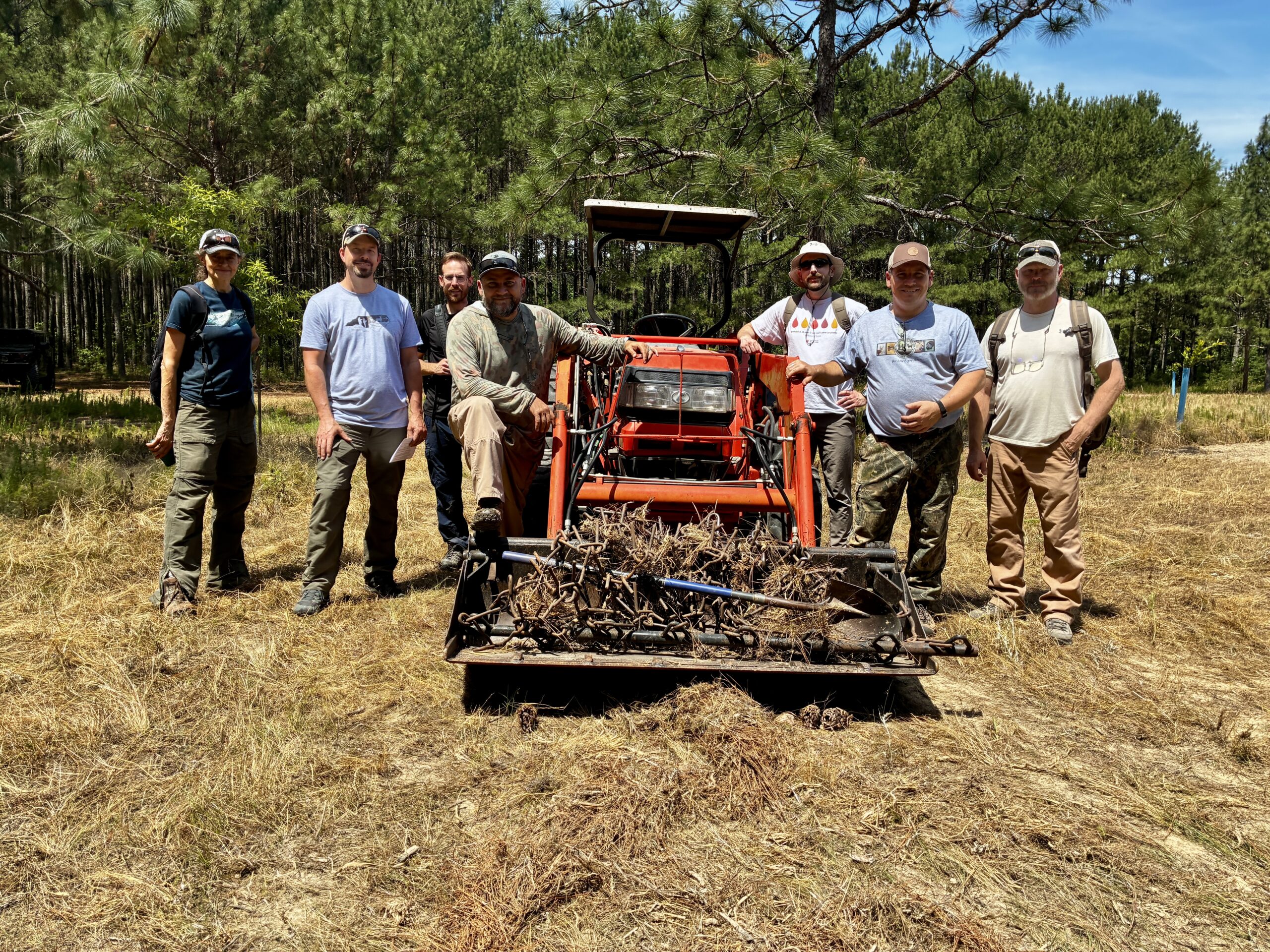
Today’s Fall Line Outdoors Wildlife Habitat Workday was a powerful reminder that meaningful conservation begins with small, steady actions. With mentors guiding every step, students spent the day learning how healthy habitat is built—not overnight, but through years of thoughtful planning, planting, and care.
The focus of today’s work was Year Two, Phase I of a three‑phase habitat management plan. Students began by reviewing what quality habitat truly requires: food, water, shelter, and space, including the travel corridors wildlife rely on. They also learned why the early years of habitat work often involve clearing out invasive plants and rebuilding soil health before anything new can thrive.
Planting a Food Plot With Purpose
Once the groundwork was set, students moved into hands‑on work, installing a warm‑season annual food plot designed to support a wide range of wildlife. With buckets, spreaders, and a fish scale in hand, they planted a diverse mix:
- Soybeans – high‑protein forage for deer
- Cowpeas – resilient, drought‑tolerant browse
- Sorghum – structure and seed for birds and small game
- Sunflower – pollinator value and nutritious seed
- Okra – a hardy warm‑season plant that wildlife readily use once pods are broken
This blend reflects a key lesson from today’s instruction: diversity feeds more species and strengthens the land. Students also learned how to prepare a firm seedbed, why seed‑to‑soil contact matters, and how exclusion cages help measure browsing pressure throughout the season.


Adding the Next Layer: Native Shrubs for Phase II
To support Phase II, students planted native Chickasaw plum, adding a much‑needed shrub layer to complement the oaks and poplar planted last year. These plums will eventually provide soft mast, dense cover, and early‑season pollinator support—exactly the kind of multi‑benefit habitat feature that makes wildlife flourish.
Recycle what you already own
Reusing an old box blind cuts waste and strengthens the habitat work you’ve already done. A quick frame repair, a tightened roof, and fresh natural cover will turn this weathered blind into a clean, low‑impact setup deer already trust. It saves resources, limits disturbance, and gives you a reliable, well‑blended perch for the fall season.


The Most Important Lesson: Patience
The biggest takeaway of the day wasn’t a tool or a technique—it was perspective. Students saw firsthand that habitat improvement is a long‑term investment. Removing invasives, rebuilding soil, establishing perennials, and encouraging early successional plants all take time. But every seed planted today moves the land closer to becoming a thriving, wildlife‑rich ecosystem.
Today, Fall Line Outdoors students didn’t just plant a food plot—they planted the future of this landscape, and strengthened their own role as stewards of North Carolina’s wild places.
Join us at Fall Line Outdoors! Register and Subscribe to learn more about upcoming events