
When people think of conservation, lethal deer removal might not be the first thing that comes to mind—but in North Carolina, regulated deer depredation is quietly doing essential work behind the scenes.
With an estimated 1 million white-tailed deer roaming the state, many agricultural areas face higher deer densities than the land can naturally support. Crops like soybeans, corn, sweet potatoes, and peanuts—major contributors to North Carolina’s $4.7 billion crop economy—are also high on the menu for deer. Left unchecked, over-browsing can devastate not just crops, but native habitats too.
Deer depredation does not replace hunting; it complements it under very specific circumstances. Hunting is a cornerstone of wildlife management and conservation funding, and it plays a big role in maintaining healthy deer populations across very broad landscapes. Depredation, on the other hand, is a targeted response to property damage—usually on farms—where deer are causing significant economic or ecological harm. So, while both involve harvesting deer, they serve different purposes. Hunting is about wide-spread population control, tradition, and conservation funding. Depredation is about protecting crops, habitat, and safety when deer numbers become locally unsustainable.
So, how does it help?
Deer depredation permits allow landowners to remove deer that are causing significant damage. This process is tightly regulated by the North Carolina Wildlife Resources Commission, with guidelines on the number of deer, approved methods, and mandatory reporting. It’s not about indiscriminate killing—it’s about restoring ecological balance and economic stability.
For the environment, reducing excessive deer populations means that North Carolina’s wild places can regenerate and support greater biodiversity. Native plants recover, and other wildlife species—like ground-nesting birds and small mammals—benefit as well.
For farmers, it means fewer financial losses. Deer damage costs millions of dollars annually, and targeted depredation offers a pragmatic solution to protect vital crops while preserving rural livelihoods, whose financial impact is felt well beyond the rural communities that farmers serve.
For communities, reducing deer density lowers the risk of vehicle collisions and limits the potential spread of diseases like chronic wasting disease (CWD).
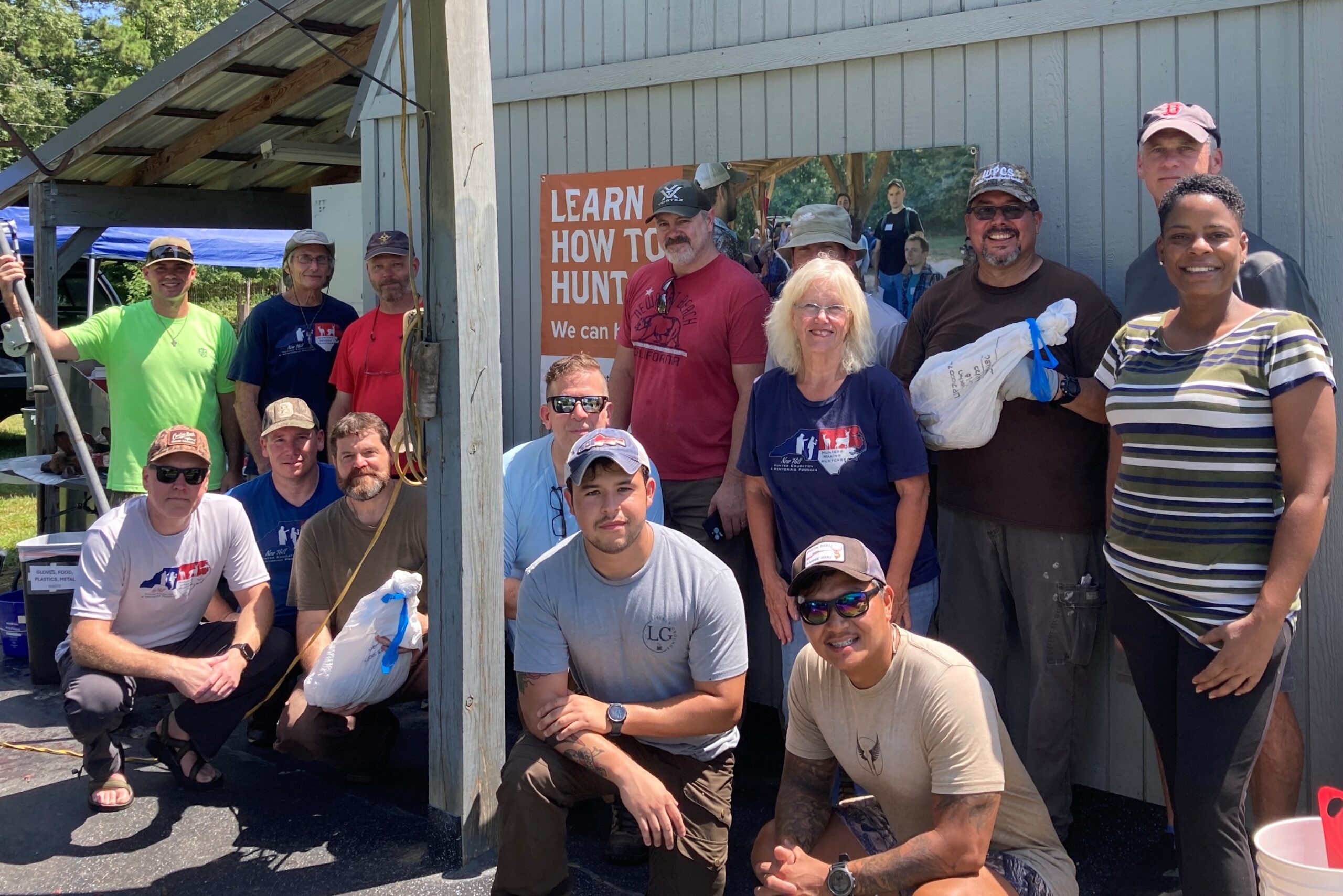
Depredation can even become a source of nourishment and education. Take Fall Line Outdoors—a local chapter of the North Carolina Wildlife Federation. This past weekend, they accepted ten depredation deer, giving students in the New Hill Hunter Education and Mentoring Program hands-on lessons in skinning and quartering. The venison will go on to teach new hunters how to process their own harvests this fall—a full-circle example of conservation, community, and sustainability.
Conclusion
Deer depredation isn’t a loophole; and it does not replace hunting in the fall—it’s a conservation tool. By using science, regulation, and community engagement, North Carolina is balancing ecological health with agricultural prosperity. And when done right, everyone benefits: the environment, the economy, and the next generation of conservation-minded hunters.