
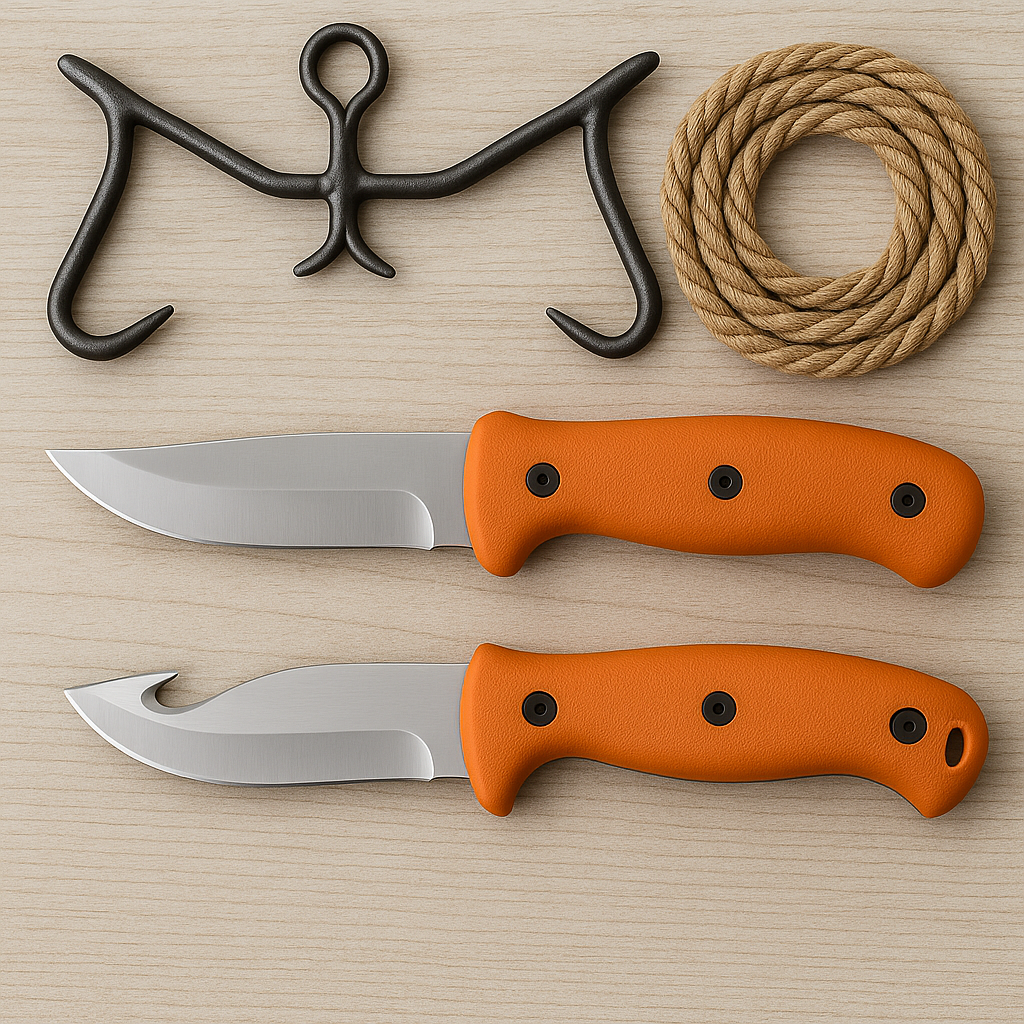
Field dressing a deer is a crucial step in preserving your meat, reducing spoilage, and making transport easier. While the how of field dressing often follows the same anatomical principles, the where and what you use can vary depending on your gear, terrain, and hunting situation.
In this post, we’ll break down the most common field dressing techniques, including hanging and ground methods, and the pros and cons of each setup.
🏞️ Why the Method Matters
Different field dressing techniques suit different environments:
- Remote areas might not allow for full hanging setups.
- Cold weather gives you more time to work.
- Heat and insects demand faster, cleaner work.
- Solo hunters may need simpler options.
Choosing the right technique is about balancing your available tools, help (if any), and your goal (just gutting or full skinning and quartering).
🪓 Common Field Dressing Techniques
1. On-the-Ground Field Dressing
Best For: Quick gutting in remote or brushy areas
How It Works:
- Lay the deer on its back, preferably on a slight incline (head uphill).
- Spread the hind legs.
- Make your initial incision from the pelvis to the sternum (avoid cutting organs).
- Roll out the viscera.
- Prop the body open with a stick or rock for cooling.
Pros:
✅ No equipment needed
✅ Fast, minimal setup
✅ Good for solo hunters
Cons:
❌ Can be messy
❌ Harder on your back and knees
❌ Dirt and hair may contaminate meat
Pro Tip: Lay a tarp or contractor bag under the deer to reduce mess and keep the meat clean.
2. Hanging with a Tree & Gambrel
Best For: Clean, controlled field dressing at camp or roadside
How It Works:
- Use paracord or ratchet straps to secure a gambrel to a sturdy tree limb.
- Insert the gambrel through the hind legs (through the hocks).
- Hoist the deer so it’s suspended head-down.
- Field dress with gravity assisting you—organs fall naturally as you work.
Pros:
✅ Gravity makes gutting easier
✅ Cleaner and less contamination
✅ Easier to skin afterward
Cons:
❌ Requires a good tree limb and rope/pulley
❌ Can be tough solo without a winch
❌ Takes more time and setup
Pro Tip: Use a block-and-tackle hoist or a hitch-mounted winch if you’re working solo.
3. Tripod Gambrel Setup
Best For: Open fields or areas without good trees
How It Works:
- Set up a tripod with a pulley system.
- Hang the deer using a gambrel just like on a tree.
- Field dress and/or skin in place.
Pros:
✅ Can be used anywhere
✅ Very stable and adjustable height
✅ Great for processing at hunting camps
Cons:
❌ Requires transporting tripod
❌ Setup can be bulky
Pro Tip: Look for collapsible aluminum tripod hoists—they’re lighter and easier to pack.
4. Quartering in the Field (a.k.a. “Gutless Method”)
Best For: Backcountry or pack-out situations
How It Works:
- Skip gutting entirely.
- Skin each side while the deer lies on its side.
- Remove quarters, backstraps, and neck meat.
- Flip over and repeat.
Pros:
✅ No gutting required
✅ Clean meat with minimal mess
✅ Ideal for backpack hunts
Cons:
❌ You don’t get organ meat (heart, liver)
❌ Takes practice to avoid waste
❌ Can be slower if unfamiliar
Pro Tip: This method is legal in most states, but always check local game laws regarding meat salvage.
5. Hanging by the Neck (Uncommon but Occasionally Used)
Best For: Hunters with head hoists or limited hind leg access
How It Works:
- Hoist the deer by the neck or antlers.
- Cut around the anus and remove entrails downward.
Pros:
✅ Useful in tight spaces
✅ Organ removal still aided by gravity
Cons:
❌ Less ergonomic
❌ Increased risk of contamination
❌ Not ideal for skinning or quartering
🧰 Recommended Gear for Field Dressing
No matter your method, make sure you pack the following:
- Sharp field knife(s)
- Bone saw or game shears
- Disposable gloves
- Game bags
- Headlamp (for low-light jobs)
- Zip ties or string (to tie off esophagus or tag carcass)
- Paracord or pulley system
- Tarp or plastic sheet (especially for ground dressing)
🧼 Clean Work = Better Meat
No matter how you dress your deer, always aim for cleanliness. Keep dirt, hair, and digestive fluids off the meat. Avoid puncturing the bladder or intestines. Cool the carcass quickly—especially in warm conditions.
🎯 Conclusion
Field dressing isn’t one-size-fits-all. Whether you’re working deep in the woods, at a roadside pull-off, or back at camp, there’s a technique that suits your situation. Understanding these options gives you the flexibility to work cleanly, efficiently, and with respect for the animal.
Take the time to practice, plan your gear, and always choose the method that fits your hunt best. A successful field dressing job is the first step toward a freezer full of clean, delicious venison.