
Photo Credits: Christie Cornwell and John McNesby
Introduction
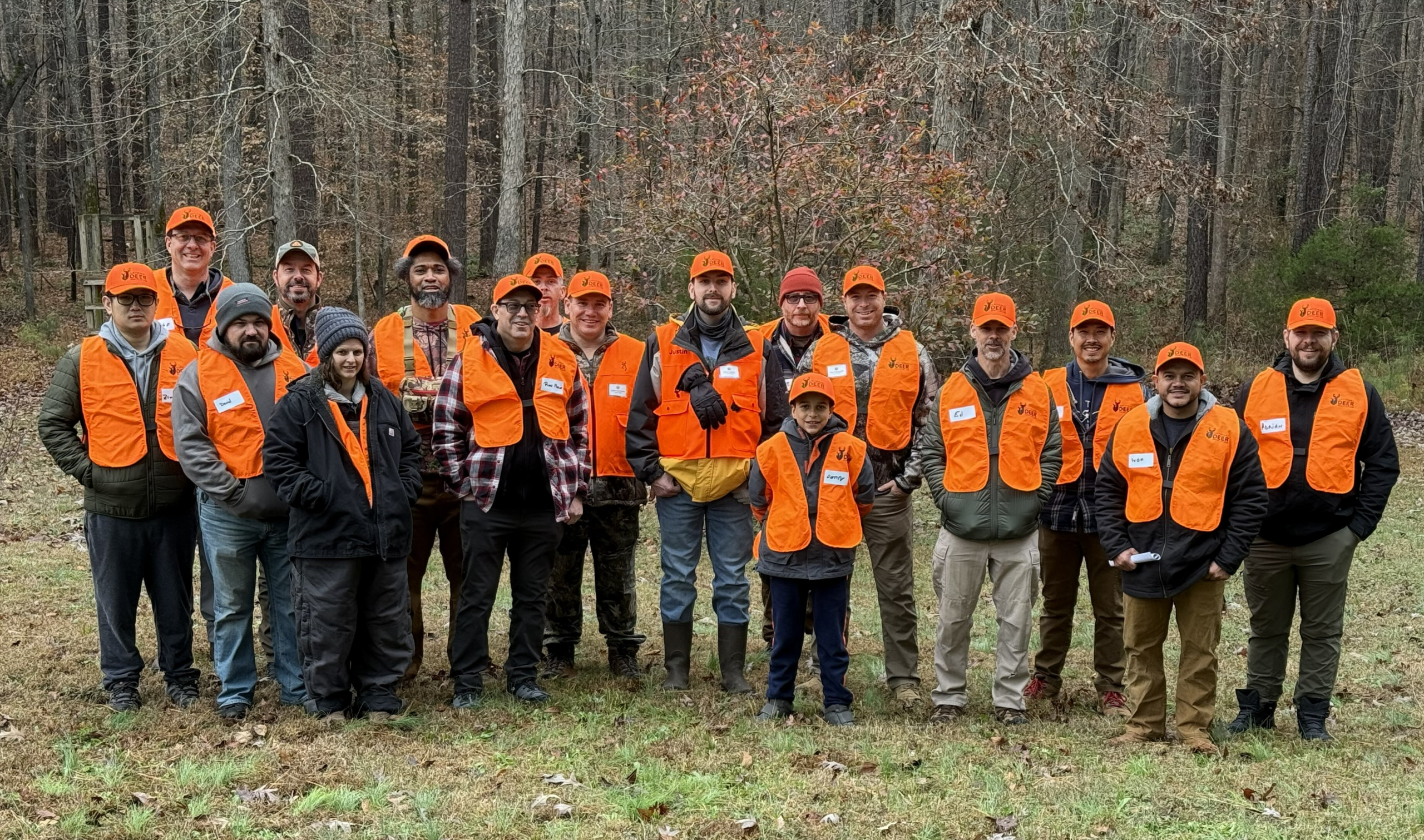
Fall Line Outdoors, a Chapter of the North Carolina Wildlife Federation hosted Deer Processing Classes in both Apex and Lillington, North Carolina on December 6th that gave new hunters the confidence and skills needed to make the most of their future deer harvests. More than just a workshop, it was a celebration of ethical hunting, sustainable food sourcing, and the traditions that connect people to the land.
The North Carolina Wildlife Resources Commission Learn to Hunt Program was instrumental in fostering public demand for these classes. So much interest was raised that Fall Line Outdoors will be hosting more classes this month.
The National Deer Association (NDA) Field to Fork program–a food-focused hunter recruitment initiative that welcomes adults from non-hunting backgrounds – also helped to inspire this project, and donated blaze orange hats and vests, adding to the safety and spirit to this event.
Fall Line Outdoors appreciates these partnerships, which strengthen shared goals of empowering and educating the next generation of conservation-minded hunters.
Participant Experience: Building Skills and Confidence
Attendees praised the class for its practical, step-by-step instruction. From field dressing to processing, participants gained confidence in handling every stage of deer harvesting. For newcomers, the hands-on guidance was empowering; for seasoned hunters, it was a chance to refine techniques and share knowledge. One participant reflected, “I never thought I’d feel this confident processing my own deer. Now I know I can do it start to finish.”


Top Skills Learned:
- Safe and efficient field dressing
- Safe meat handling procedures
- Proper butchering and deboning techniques
- Packaging and storage for long-term use
- Respectful use of the whole animal
Networking and Community Building
Beyond technical skills, the event fostered camaraderie. Hunters swapped stories, shared tips, and built connections that extend beyond the classroom. This sense of community strengthens the hunting tradition and ensures ongoing support for those passionate about the outdoors.
Ethical and Sustainable Hunting: Valuing Organic Meat
A central theme was the value of ethically sourced, organic meat. Participants learned how responsible harvesting provides sustainable protein while honoring the animal. The class emphasized respect for wildlife and the importance of taking off as much of the deer meat as possible, reinforcing the principles of ethical hunting.
Conservation Impact: Stewardship of Land and Wildlife
The workshops emphasized hunting’s vital role in conservation. Responsible deer harvesting helps control deer populations, thereby protecting crops, wildlife habitats and lives. In North Carolina, unchecked deer numbers can destroy the understory that countless animals depend on, cause crop damage that cost farmers millions of dollars every year, and increase deer: vehicle collisions. By managing deer populations, hunters become stewards of wildlife and the land, maintaining balance for future generations.
Personal Connection: From Field to Table
For many, the most meaningful outcome was a deeper connection to their food source. Processing their own harvest fostered respect and gratitude for the journey from field to table. This hands-on experience strengthened self-reliance and appreciation for sustainable living.
Conclusion: Empowerment and Legacy
The Fall Line Outdoors Deer Processing Class was more than an educational event—it was an empowering experience that marked the beginning of a meaningful journey for student participating focused on ethical hunting, sustainable food sourcing, and stewardship of the land.
Fall Line Outdoors invites all who value conservation and self-reliance to join future workshops—because every hunter has a role in shaping the legacy of ethical, sustainable stewardship.