
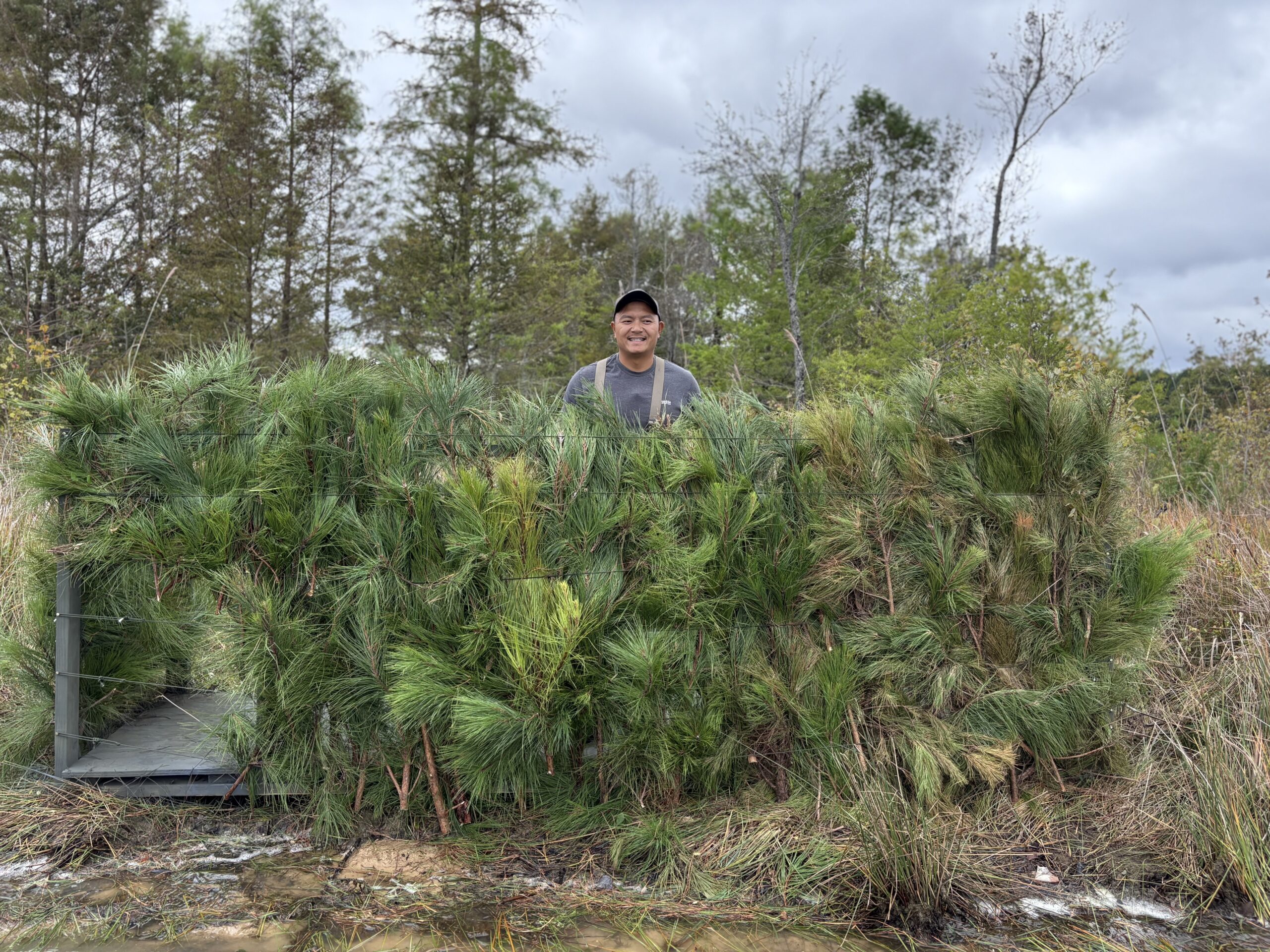
 Building Our First Waterfowl Blind
We’re kicking off this waterfowl season the right way — by building our very first blind together! Nothing beats working side by side, putting in the effort before the first flights of the season.
In North Carolina, waterfowl season is split into three segments, giving hunters multiple chances to get after it:
North Carolina Duck Hunting Season Overview (2025–2026)
The North Carolina waterfowl season begins in early September with the teal season, lasting for the first two weeks. During this time, hunters can expect to see both blue-winged and green-winged teal. Following the teal season, Canada goose season opens for the remainder of September. Most geese harvested during this period are resident birds, spending much of their time in the local area.
General Duck Season Segments (Splits)
First Split:

October 16–18, 2025
This short, three-day opener mainly features wood ducks, local mallards, Canada geese, and the remaining teal. Most of these birds are local residents found in smaller ponds, creeks, and wooded wetlands.
Second Split:
November 8–29, 2025
During this three-week period, hunters begin to see a fresh push of migrating birds from the flyway. Expect a wider variety of puddle ducks (dabblers) such as American black ducks, northern shovelers, wigeons, gadwalls, and newly arrived mallards. A few late teal may still be present.
Third Split:
December 19, 2025 – January 31, 2026
This is typically the prime migration period when northern weather pushes large flocks into North Carolina. Hunters can expect to see an increase in diving ducks like lesser and greater scaup (bluebills), buffleheads, redheads, and ring-necked ducks, along with pintails and gadwalls among the dabblers.
Divers are most commonly found on larger lakes and coastal waters where they raft up in impressive numbers.
Special Hunt Opportunities
North Carolina also offers dedicated days for youth and veteran hunters:
• December 6, 2025
• February 7, 2026
These hunts are excellent opportunities to introduce younger generations to waterfowl hunting or give veterans time in the blind with reduced competition and increased camaraderie.
This blind was designed with mobility in mind , built sturdy but light enough to move when needed. Using trucker’s hitch knots and flexible rigging, it can be easily adjusted or relocated based on wind direction, water levels, or bird movement. A little extra work now means more adaptability later, ensuring better setups and more successful hunts throughout the season.
Blinds come in several styles, each serving a different purpose. Permanent options include box blinds, pit blinds, and wood blinds, durable structures that provide stability but limit flexibility. Portable and mobile blinds, such as A-frame, layout, boat, and skid blinds, allow hunters to adapt quickly to changing conditions. Other types like curtain and hay bale blinds offer lightweight, quick setups for short hunts or specific terrain. Choosing the right style depends on the environment, hunting goals, and how much mobility you need in the field.
Here’s to making the most of the season and building memories in the marsh.


#FallLineOutdoors #Waterfowl #DuckHunting #BuildTheBlind #HuntingSeason #NorthCarolina #WaterfowlSplit #TruckersHitch #OutdoorLife 