
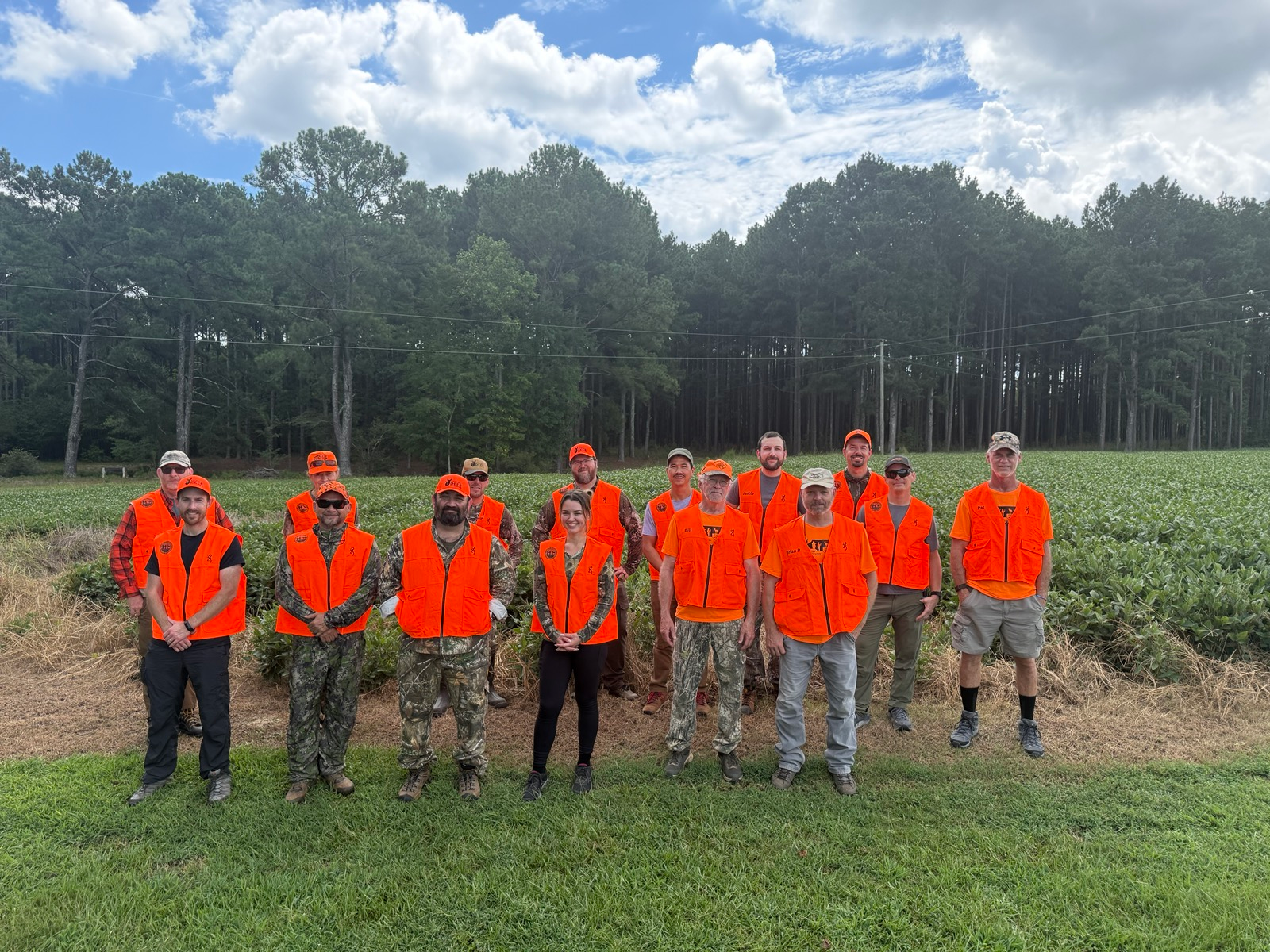
With the season now close enough to feel, Field Day 4 traded preparation of the property for preparation of the hunter. This time the students weren’t fixing straps or planting seed — they were living out the hunt itself, minute by minute, from the walk in to the moment a deer might appear. Mentors built the day around a single idea: when opening morning comes, nothing should feel new.
Suiting Up for the Hunt
The morning began the way a real hunt should. Students dressed for the field, pulled on their fall arrest harnesses, and shouldered the packs they’ll actually carry this season. From there they moved out to the elevated stands scattered across the property, treating the walk in as part of the hunt rather than a stroll to it. At each stand the routine was deliberate: clip in before climbing, ascend carefully, and only then haul up the pack and an unloaded rifle by rope — muzzle managed, hands free, nothing carried up a tree that shouldn’t be. Settled onto the platform, each student ran through the quiet opening act of a hunt: getting comfortable, ranging the shooting lanes, and picturing the shot they’ve trained for. It was a mock scenario, but every motion was the real one.

Fine-Tuning the Approach
Between sits, mentors walked the group through the thinking behind a good setup. They revisited the principles of stand placement — wind direction, travel corridors, bedding and feeding areas, and how a stand’s location can make or break a season before a hunter ever climbs it. Scouting techniques got a closer look too, sharpening the students’ eye for sign and helping them read a piece of ground the way a deer moves through it. The refreshers tied back to earlier field days: how the food plots and feeders the group had prepared fit into the larger picture, and what the typical daily activity of deer means for when and where to be in a stand.

Following the Blood Trail
Not every shot ends where it’s taken, and a responsible hunter is ready for that. The group worked through a clinic on following a blood trail — reading the color and pattern of sign, marking the last point of blood, moving slowly and deliberately, and understanding the difference between pushing an animal and recovering one. It’s one of the most important and least glamorous skills in the woods, and one that separates a clean, ethical recovery from a lost animal.
The Roundtable
The day also made room to talk. In a roundtable on effective hunting strategies, mentors and students traded thinking on everything from patience and shot selection to reading conditions and adjusting on the fly. The conversation folded in a refresher on pack layout — what to carry, where to keep it, and how to reach it quietly — along with a run through the hunt preparation checklist so nothing gets left behind on opening morning. The session closed with a hunt readiness check, a straightforward gauge of where each student stands as the season approaches.

Ready for the Season
Field Day 4 was the dress rehearsal, and the students passed it. They’ve handled the gear, worn the harness, climbed the stands, and thought through the hunt from the first step in to the final track. With that behind them, the 2026 class is truly ready for the mentored hunts ahead. When the season opens, they won’t be guessing — they’ll be hunting.
See you in the field.