
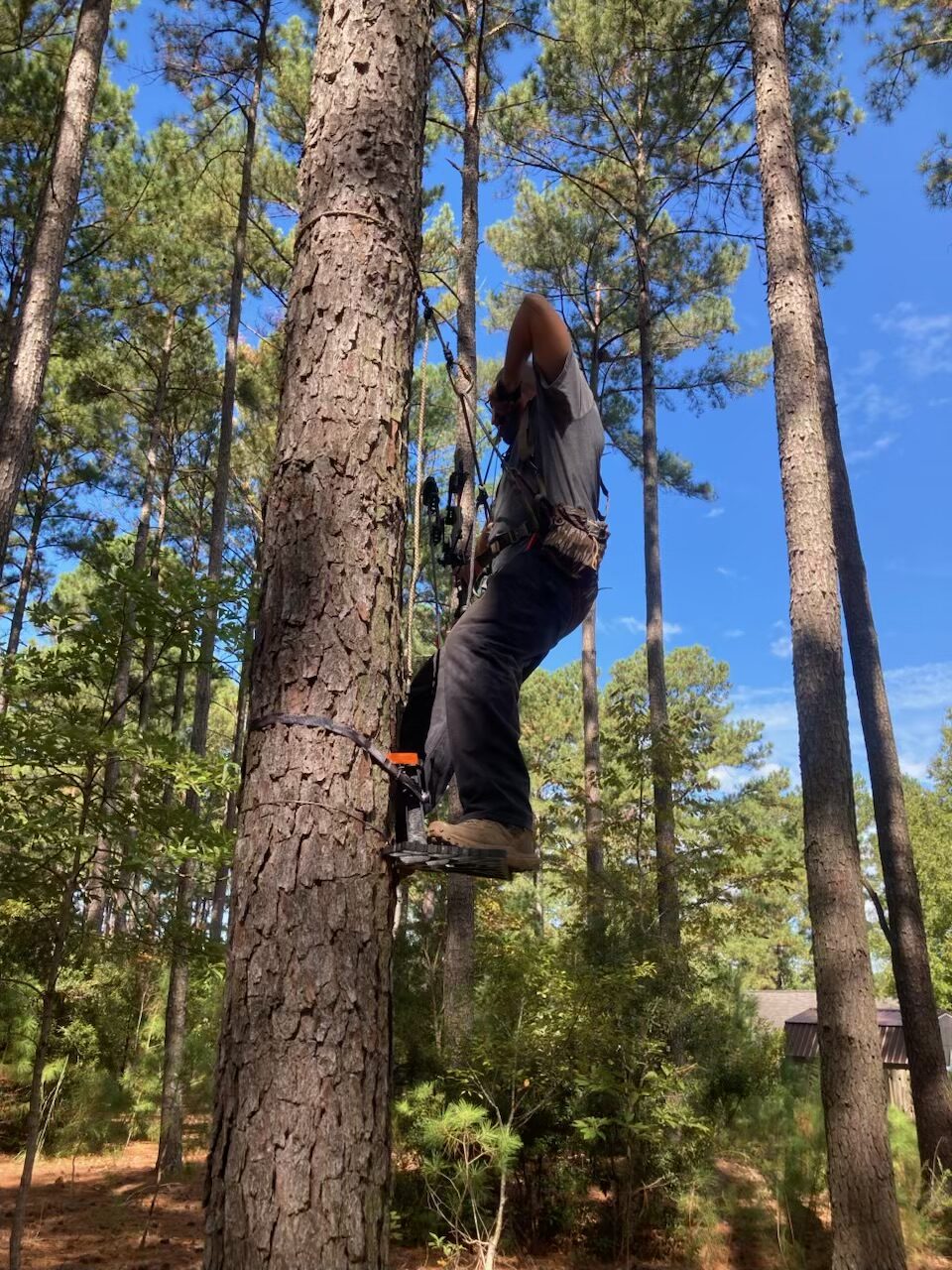
By Francisco Fuentes
There he was. Just twenty yards behind me to my left, coming on a steady walk. My wind was good,
but not perfect. I needed to be ready the exact moment I had a clear shot with my Hoyt bow. He walked
directly into my window and suddenly stopped, as if he knew something wasn’t right. I could feel the
slightest breeze brushing past my right ear, and I knew instantly that he had caught my scent.
Fortunately for me, he was already standing directly in my shooting lane, and I was already at full
draw. I let the arrow fly. It hit the mark with unmistakable force. The sweltering heat on opening day of
archery season is always something to consider. For a beginner, the sheer number of things you have to
take into account can feel incredibly challenging. Personally, I had to learn everything the hard
way—gaining knowledge year after year, outing by outing, through trial and error in the woods.
Finding Your Footing in the Field
Thankfully, new hunters today do not have to go it alone. With the assistance of community support
groups like the Fall Line Outdoors Chapter in Harnett County—an affiliate of the North Carolina
Wildlife Federation—new enthusiasts have a place to turn. Whether you want to become a skilled
woodsman, a dedicated conservationist, or an effective hunter, these organizations provide the exact
tools needed to learn the craft safely and successfully. The ultimate goal is to pass that knowledge
forward, empowering new hunters to eventually teach others from their own experiences. Over the
years, I have hunted deer in almost every way imaginable. I have used man-made ground blinds,
commercial ground blinds spacious enough to sleep in, climbing stands, ladder stands, and permanent
tower blinds equipped with heaters for the freezing winter months. While those are all great traditional
ways to hunt, I eventually found a method that allows me to hunt better, longer, and more comfortably
than all of them combined.
The Shift to Saddle Hunting
It is called saddle hunting. At first, I was not a fan. I was set in my old ways. But like anything else in
life, if you take the time to truly learn how a system works, you will fall in love with it. I went from
lugging heavy climbers or dragging awkward ladder stands into the brush to carrying under ten pounds
of total gear weight. With a saddle setup, I can safely climb almost any tree in the forest that can
support my weight. The system is extremely mobile and lightweight, making it incredibly comfortable
to walk around the woods while scouting out new, unpressured spots. Most importantly, it keeps you in
the woods longer, meaning you enjoy the day longer and can truly challenge yourself against your
quarry. There are many different ways to configuration a saddle hunt. To get up into your tree, you can
utilize the “one-stick” climbing method, or you can purchase a standard set of four climbing sticks.
While there are many different brand-name saddles on the market today, they ultimately all do the same
thing and share the exact same core concept.
Key Advantages of Saddle Hunting
- Lightweight: Drops your minimum gear package to under ten pounds
- Extreme Mobility: Packs tightly so you can scout and hike deep into the woods with ease
- 360-Degree Shooting: Allows you to rotate completely around the tree trunk for total coverage
- Tree Flexibility: Lets you climb around limbs on the way up without having to cut branches down
- Longevity: Textile-based gear eliminates the risk of metal parts rusting over seasons of hard use
- Unmatched Comfort: Ergonomic design prevents the pressure points and soreness of metal seats.
Take the Next Step
If you are interested in learning how to saddle hunt, becoming a true conservationist, and discovering
so much more about the great outdoors, reach out to the folks at the Fall Line Outdoors Chapter. They can help you get started safely, and
get you through the learning curve. You can connect with them, find local resources, and view upcoming events on the web at
falllineoutdoors.com.


